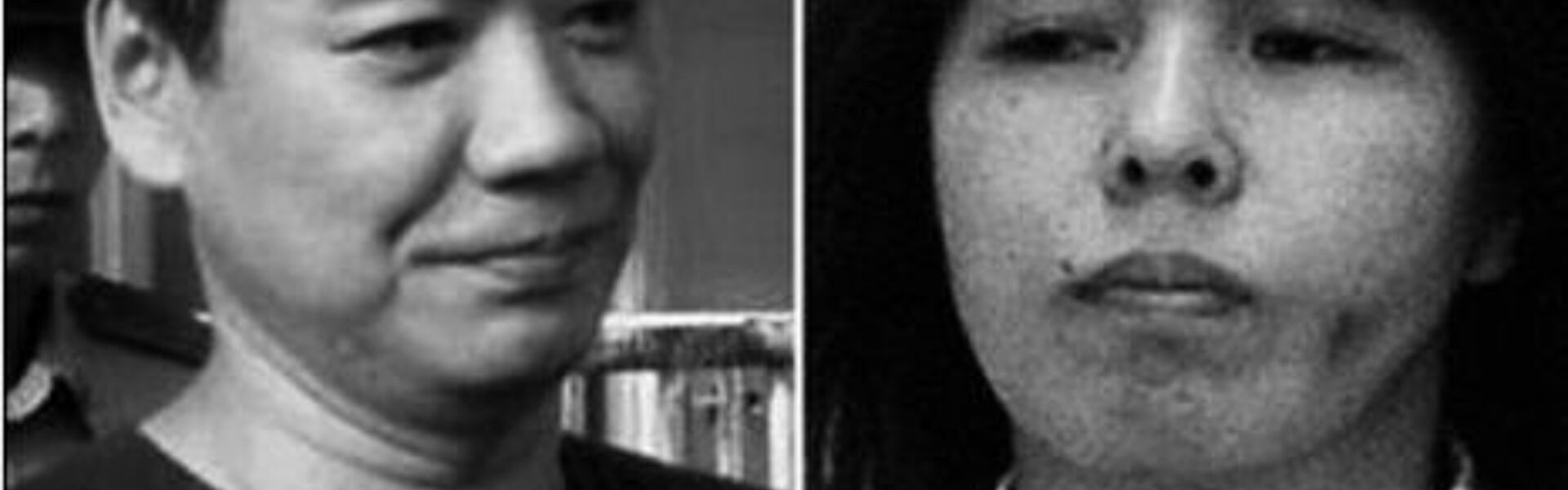
In March 2002, a 17-year-old girl walked into a police station in Kitakyushu, in southern Japan, and told officers what had been happening inside an ordinary-looking apartment for almost a decade. What she described became known as the Kitakyushu confinement murders, one of the most disturbing criminal cases in modern Japanese history. At its centre was a con man named Futoshi Matsunaga.
This guide brings together the full story of the case and all four episodes of our series on it. The case involves the deaths of children and long-term abuse, so we’ve kept the details here to what is needed to understand it.
Who is Futoshi Matsunaga?
Futoshi Matsunaga was born in April 1961 in Kitakyushu, Fukuoka Prefecture, and grew up in the nearby town of Yanagawa. People who knew him described him as charming and clever. He married young, had a son, and in the 1980s ran a futon business in which, according to later accounts, employees were intimidated and mistreated.
By the early 1990s he had become a full-time fraudster, taking an estimated 180 million yen from people through scams and blackmail. When the police came looking, he and his partner Junko Ogata, a former schoolmate from Yanagawa, disappeared. They resurfaced in Kitakyushu, where most of the crimes took place.

How he controlled his victims
Matsunaga rarely used force on strangers. He found people with money or secrets, gained their trust, and then cut them off from everyone else. Victims were moved into apartments he controlled, stripped of their savings, and kept under constant rules and threats. Crucially, he made people hurt one another, so that every victim felt guilty and complicit. Families were turned against their own members, and no one believed they could leave.
This is what makes the case so hard to understand from the outside: for most of those years, nobody was locked in. They were held by fear, debt and shame.
The victims
From 1994, Matsunaga took over the life of Kumio Toraya, a man who had confided secrets about his past. Kumio and his young daughter were held for years. Kumio died in February 1996.
In 1997, after Junko Ogata briefly tried to break away, Matsunaga drew in her entire family. Her relatives handed over tens of millions of yen and were brought into the same system of isolation and control. Over the following months, six members of the Ogata family died:
- Takashige Ogata, Junko’s father, in December 1997
- Shizumi Ogata, her mother, in January 1998
- Rieko Ogata, her younger sister, in early 1998
- Kazuya Ogata, Rieko’s husband, in April 1998
- Yūki Ogata, Rieko and Kazuya’s five-year-old son, in 1998
- Aya Ogata, their ten-year-old daughter, in June 1998
No bodies were ever found. The remains were disposed of so thoroughly that, years later, the prosecution had to build its case almost entirely on the testimony of survivors. Other deaths connected to Matsunaga, including a woman and child who lived with him earlier in the 1990s, could never be proven.


The escape that ended it
Kumio Toraya’s daughter spent most of her childhood under Matsunaga’s control. In January 2002 she escaped, but he found her and brought her back. On 6 March 2002, at 17, she got away again and went straight to the police. Matsunaga and Ogata were arrested the next day when they came looking for her, and four children in their care were taken into protection.
Her courage is the reason anyone knows what happened. Without her, there was no physical evidence at all.

The trials and where the case stands now
Between 2002 and 2003, the pair were charged over seven deaths. Junko Ogata confessed. Matsunaga denied everything and claimed the women were lying.
- September 2005: the Fukuoka District Court sentenced both Matsunaga and Ogata to death.
- September 2007: the Fukuoka High Court upheld Matsunaga’s death sentence but reduced Ogata’s to life imprisonment, finding that years of abuse had left her under his control.
- December 2011: Japan’s Supreme Court upheld both rulings, although the judges were divided over Ogata’s sentence.
Futoshi Matsunaga remains on death row in Japan. Junko Ogata is serving a life sentence.
Why so few people outside Japan know this case
When the details emerged, many Japanese news outlets chose not to report them in full, judging them too disturbing for broadcast. Coverage faded quickly compared with other notorious cases, and for years most of what was written existed only in Japanese books. The case reached a wider audience in 2019 through Sion Sono’s Netflix film The Forest of Love, which was loosely inspired by it.
More Japanese true crime
For more cases from Japan, many paired with the folklore that haunts them, see our guide to Japanese True Crime Cases, or browse every Japanese true crime episode.
Sources: Futoshi Matsunaga and Junko Ogata (Wikipedia); Mainichi Japan via JIADEP on the Supreme Court ruling.