.sfgt-cf{padding:10px 0 46px} .sfgt-cf-head{display:flex;align-items:flex-end;justify-content:space-between;gap:16px;margin:0 0 20px} .sfgt-cf-h{font-size:34px !important;margin:0 !important} .sfgt-cf-sub{margin:6px 0 0 !important;color:rgba(255,255,255,.72);font-size:15.5px} .sfgt-cf-all{flex:none;display:inline-block;padding:9px 20px;border-radius:999px;border:1.5px solid rgba(186,103,200,.7);background:rgba(186,103,200,.08);font-size:14.5px;color:#fff !important;text-decoration:none !important;white-space:nowrap} .sfgt-cf-all:hover{background:rgba(186,103,200,.3)} .sfgt-cf-grid{display:grid;grid-template-columns:repeat(5,minmax(0,1fr));gap:16px} .sfgt-cf-card{position:relative;display:flex;flex-direction:column;border-radius:16px;overflow:hidden;background:linear-gradient(180deg,rgba(36,27,44,.95),rgba(18,14,23,.95));border:1px solid rgba(186,103,200,.25);box-shadow:0 8px 22px rgba(0,0,0,.4);text-decoration:none !important;color:#fff !important;transition:transform .25s ease,border-color .25s ease,box-shadow .25s ease} a.sfgt-cf-card:hover{transform:translateY(-4px);border-color:rgba(186,103,200,.65);box-shadow:0 12px 28px rgba(0,0,0,.5),0 0 18px rgba(186,103,200,.18)} .sfgt-cf-img{position:relative;aspect-ratio:4/3;overflow:hidden;background:#140f19} .sfgt-cf-img img{width:100%;height:100%;object-fit:cover;display:block;transition:transform .5s ease} a.sfgt-cf-card:hover .sfgt-cf-img img{transform:scale(1.04)} .sfgt-cf-img::after{content:"";position:absolute;inset:0;background:linear-gradient(180deg,rgba(0,0,0,0) 45%,rgba(18,14,23,.85))} .sfgt-cf-no{position:absolute;left:12px;bottom:10px;z-index:1;font-family:Oswald,Arial,sans-serif;font-size:12px;letter-spacing:.14em;text-transform:uppercase;color:rgba(255,255,255,.85)} .sfgt-cf-body{padding:13px 15px 16px;display:flex;flex-direction:column;flex:1} .sfgt-cf-t{font-family:Oswald,Arial,sans-serif;font-weight:700;font-size:17px;line-height:1.25;text-transform:uppercase;margin:0 0 6px !important;color:#fff} .sfgt-cf-m{font-size:13px;color:rgb(206,150,220);margin:0 !important} .sfgt-cf-go{margin-top:auto;padding-top:12px;font-size:13.5px;color:rgba(255,255,255,.85)} .sfgt-cf-card.soon{cursor:default} .sfgt-cf-card.soon .sfgt-cf-img img{filter:grayscale(.85) brightness(.55)} .sfgt-cf-card.soon .sfgt-cf-go{color:rgba(246,199,90,.9)} @media (max-width:1100px){.sfgt-cf-grid{grid-template-columns:none;grid-auto-flow:column;grid-auto-columns:minmax(220px,42%);overflow-x:auto;scroll-snap-type:x mandatory;padding-bottom:10px;-webkit-overflow-scrolling:touch}.sfgt-cf-card{scroll-snap-align:start}} @media (max-width:600px){.sfgt-cf-head{flex-direction:column;align-items:flex-start}.sfgt-cf-h{font-size:28px !important}.sfgt-cf-grid{grid-auto-columns:72%}} .sfgt-cf-grid{scrollbar-width:thin;scrollbar-color:rgba(186,103,200,.55) rgba(255,255,255,.06)}.sfgt-cf-grid::-webkit-scrollbar{height:6px}.sfgt-cf-grid::-webkit-scrollbar-track{background:rgba(255,255,255,.06);border-radius:6px}.sfgt-cf-grid::-webkit-scrollbar-thumb{background:rgba(186,103,200,.55);border-radius:6px} @media (prefers-reduced-motion:reduce){.sfgt-cf-card,.sfgt-cf-img img{transition:none}}
Stories Fables Ghostly Tales PodcastStorytelling Podcast of horror, folklore, true crime and stories from around the world!

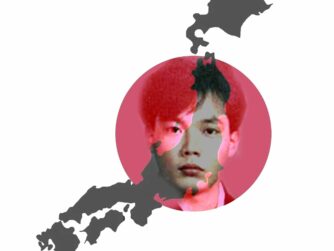
The Setagaya Family Murders: Japan’s Unsolved Case Full of Clues

Who Leaves 50,000 Clues and Gets Away? | The Setagaya Family Murders episode artwork

Just before eleven on the morning of 31 December 2000, Yasuko Miyazawa’s mother walked next door to check on her daughter’s family. Nobody had answered the phone. What she found inside the house in Kamisoshigaya, a quiet corner of Tokyo’s Setagaya ward, began one of the strangest murder investigations Japan has ever seen.

All four members of the family had been killed the night before: Mikio Miyazawa, 44, his wife Yasuko, 41, and their children Niina, 8, and Rei, 6. A quarter of a century later, nobody has been charged.

What makes the case so maddening isn’t a lack of evidence. It’s the opposite.

The killer who didn’t leave

Most killers run. This one stayed. Police believe the intruder remained in the house for hours after the attack, with estimates ranging from two to as many as ten. During that time he ate and drank from the family’s fridge, went through drawers, took some cash, used the family computer and treated a wound to his own hand.

Some details that circulate online, such as the claim that he took a nap on the sofa, have never been confirmed. But the broad picture is accepted by investigators: a man who felt calm enough to make himself at home in a house where he had just killed a family.

A house full of evidence

When people call this case Japan’s most baffling, this is why. The killer left behind almost everything a detective could hope for:

  • Fingerprints and DNA, including his own blood from the hand wound
  • Clothing, including a sweatshirt and a jacket, plus a hip bag, gloves and a hat
  • The knife used in the attack
  • Footprints from Slazenger trainers made in South Korea

Police traced the shirt to shops in Kanagawa Prefecture, where around 130 had been sold, but only a small number of buyers were ever identified.

Over the years there have been reports that DNA analysis points to a man of mixed ancestry, and theories that he was a foreign national who left Japan soon after. None of that has been confirmed, and police have never publicly named a nationality.

None of the fingerprints or DNA has ever matched a criminal database. Every clue points to a person, and none of them points to a name.

The profile police are working from

Investigators believe the killer was a slim man around 170 cm tall. Early profiles described someone young, which means that if he is still alive, he has now lived far longer as a free man than Niina and Rei were allowed to live at all.

Twenty-five years on

The investigation is one of the largest in Tokyo’s history, and the Metropolitan Police still offer a reward of ¥20 million for information that solves it. Every December, as the anniversary comes around, the appeals go out again.

The case also changed Japanese law. Families of victims, including those connected to Setagaya, campaigned against the statute of limitations on murder. In 2010 Japan abolished it for crimes that can carry the death penalty, which means this case can never simply expire.

For years the house stood empty at the edge of a park, fenced off and kept for an investigation that never found its ending. Plans to demolish it have been reported since 2019, but the case itself shows no sign of being forgotten.

Keep listening

Our episode walks through the night hour by hour and asks the obvious question: how does someone leave fifty thousand clues and still get away? For more unsolved and infamous cases, see our guide to Japanese True Crime Cases, or read about the Kitakyushu confinement murders.

Sources: Setagaya family murder (Wikipedia).

Subscribe to weekly articles!

New folklore deep dives, true crime stories and episode picks from the Tale Teller, once a week. No spam.

Join the discussion

Further reading

Stories Fables Ghostly Tales Podcast